
← Smart Estonian Company · article 8 in the series
We now have an AI colleague. Her name is Annika.
Author: Olga Luštšik
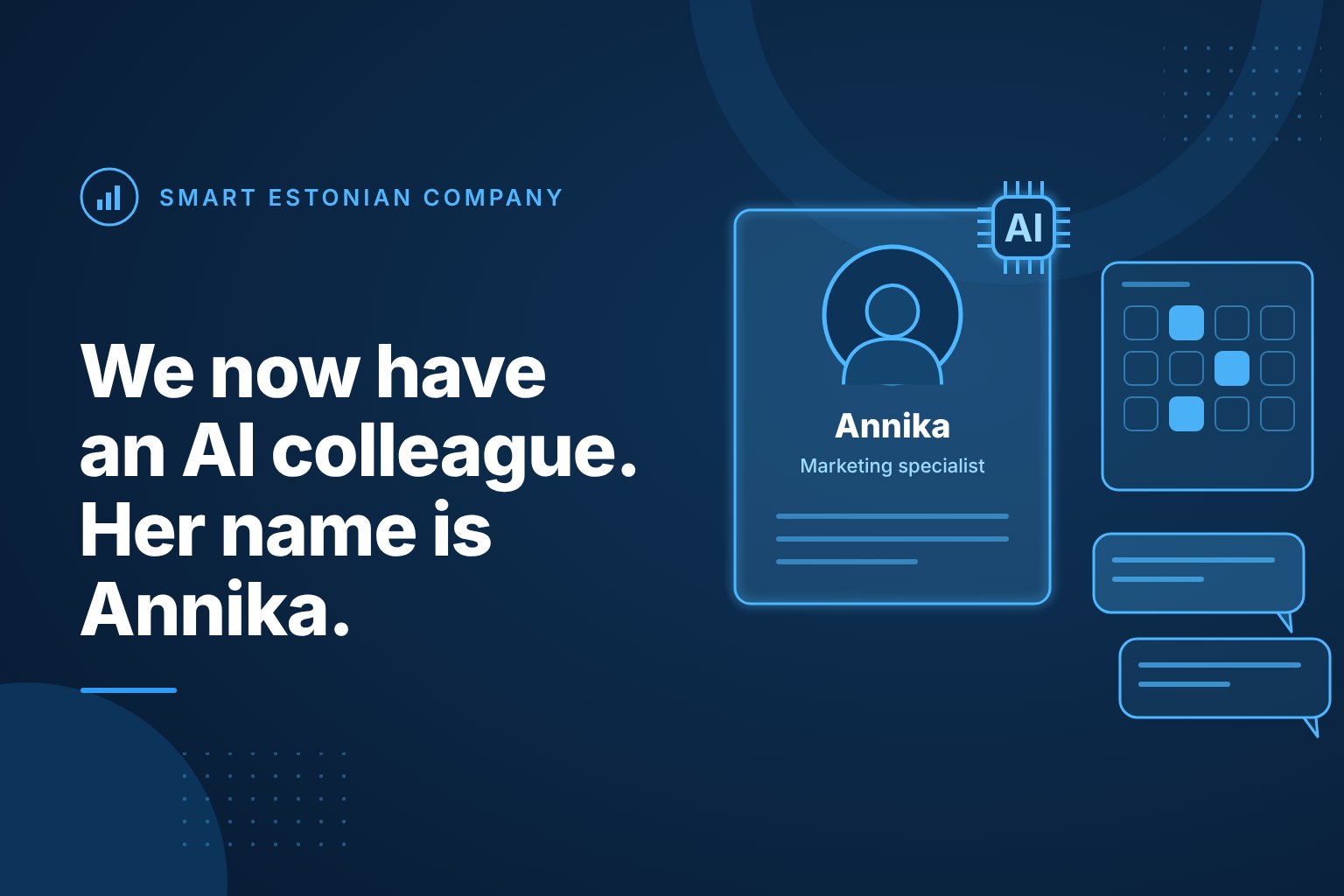
At a home furnishings company, ChatGPT access sat unused. Once the AI was given a name, a photo, a background and a job title, she became a colleague to the team, and posts started appearing every week.
This article was first published in Estonian in Äritehnoloogia.
This article is part of the “Smart Estonian Company” series, where I share practical examples of how local companies apply AI and digitalisation.
The previous stories in the series have shown how AI and other digital solutions take over manual work that nobody really wants to do. This time I’ll talk about how to “hire” a new employee who isn’t human.
No marketing specialist, but marketing still had to be done
I recently advised an Estonian home furnishings company with twenty employees. They had no dedicated marketing manager, and social media content got made whenever someone had time.
I asked the CEO how posts get made at the moment.
“Everyone does something. The sales manager sometimes writes a sentence to go with a picture, and I edit in the evenings if I have time left. Mostly it doesn’t get done. I look back and see that nothing has been posted for a whole month, and I feel guilty.”
I asked whether they had tried AI.
“We tried. I gave the whole team ChatGPT access and told them to use it for making posts. People didn’t really take to it. Some employees didn’t know what to write. Others were probably afraid of doing something wrong. The access just sat there. I was mainly the one using it, now and then.”
How AI became Annika
Instead of talking to the team about an AI tool or a bot, we did something simpler. We hired the AI and gave it a human-like identity.
1. We gave the AI a name and chose a suitable photo, then described her background: her name is Annika, she is 35, she is raising two children and works remotely from Spain. Annika has a university degree in philology and is a passionate football fan.
2. We trained Annika. We explained how things work here and gave her previous posts and product descriptions to read, from which Annika learned about the company and our products.
3. We changed our attitude and the way we address her. We started communicating with Annika as with a real remote employee, not as a tool. Instead of opening ChatGPT and starting a task “from scratch”, the sales manager writes to Annika like this: “Annika, a new product has arrived in our warehouse, please come up with three post ideas. Here are two photos of it.” Annika sends back three drafts, and we choose one. Since Annika likes football, she also adds some football news about yesterday’s games at the end of her reply. It’s small details like these that make the team see Annika as a real colleague.
When the team treats AI as a colleague who simply works on the other side of the screen, rather than as a robot that carries out a task, the collaboration is more productive. People approach the task more positively when the AI has human parameters: a name, a photo, a way of talking, a background. Some companies go even further and add the AI colleague to the organisational chart, with a job title and reporting line. Annika’s job title became “marketing specialist”, and she reports to the sales manager.
What changed
Three months later, the company was posting on social media every week, no longer at random. Content creation no longer rested on one person’s shoulders, as the whole sales team used Annika’s services. Annika filled a role the company had never even had in its budget, and did it for the price of a software subscription, not a salary and payroll taxes.
Sound familiar?
When preparing Digitalisation Roadmaps, I see more and more often that the obstacle isn’t the technology itself but the way the change is presented to the team.
The technology itself is usually fine. The problem lies in attitude: employees don’t know how to communicate with AI, or they fear it will take over their work. A name and a clear role turn AI into a colleague it’s easy to ask for help.
Think about your own company: does your team have access to AI but not use it?
Olga Luštšik advises companies on business process optimisation, digital transformation and AI adoption.
Digiwise helps companies find the processes where digitalisation and AI deliver measurable results. If you want to know where your company has similar opportunities, start with a Digitalisation Roadmap.
Topics: HR, marketing, AI
This article is part of the series “Smart Estonian Company”: practical stories from Estonian companies on their way to digitalisation.
← Previous: 50 documents nobody reads