
← Smart Estonian Company · article 9 in the series
Those annoying first-time customers
Author: Olga Luštšik
Small first-time customers create the most work and the least margin. An AI-based email assistant collects the missing information from the customer itself.
This article was first published in Estonian in Äritehnoloogia.
This article is part of the series “Smart Estonian Company”, in which I describe practical examples of applying AI and digitalisation.
Small customers and endless clarifying emails
One of my clients sells souvenirs and promotional gifts. I asked the company’s manager which customer segment is the most profitable.
“The most profitable is a large company that is a regular customer. Small first-time customers, on the other hand, create the most work for us. They can’t put into words exactly what they actually want, and we have to exchange several emails to clarify the order. The margin is small, but there is a lot of work. I would rather deal only with large customers. I’m planning to stop serving small customers altogether.”
I asked how taking orders is organised.
“Regular customers send an email with their specific order, and from there it’s easy. For new customers there is a short enquiry form on the website. The customer fills it in and I get an email. Then I write to the customer with additional questions and clarify the order. I’ve been in this business for 5 years, so I know all the questions by heart. Last month I went on holiday and another employee stood in for me. When I came back, it turned out that many of the orders taken had important information missing. Several times the wrong products were made, or production couldn’t start at all. I probably hadn’t explained all the criteria and conditions well enough in advance.”
The manager of another company, which offers cleaning services, described a similar problem to me. She also wanted to focus only on large clients. Small clients, such as apartment associations, send too little information with their first enquiry, and bringing on each new client takes considerable extra work to find out all the information needed to prepare an offer.
Old and new solutions
Until now, the most common advice has been to build a detailed order form on the website, where the customer can use categories and drop-down menus to describe exactly what they want. Such a form would collect all the necessary information from the customer at the moment the order is placed. Building a convenient dynamic form is expensive for the company. Filling in a long form is a hassle for the customer.
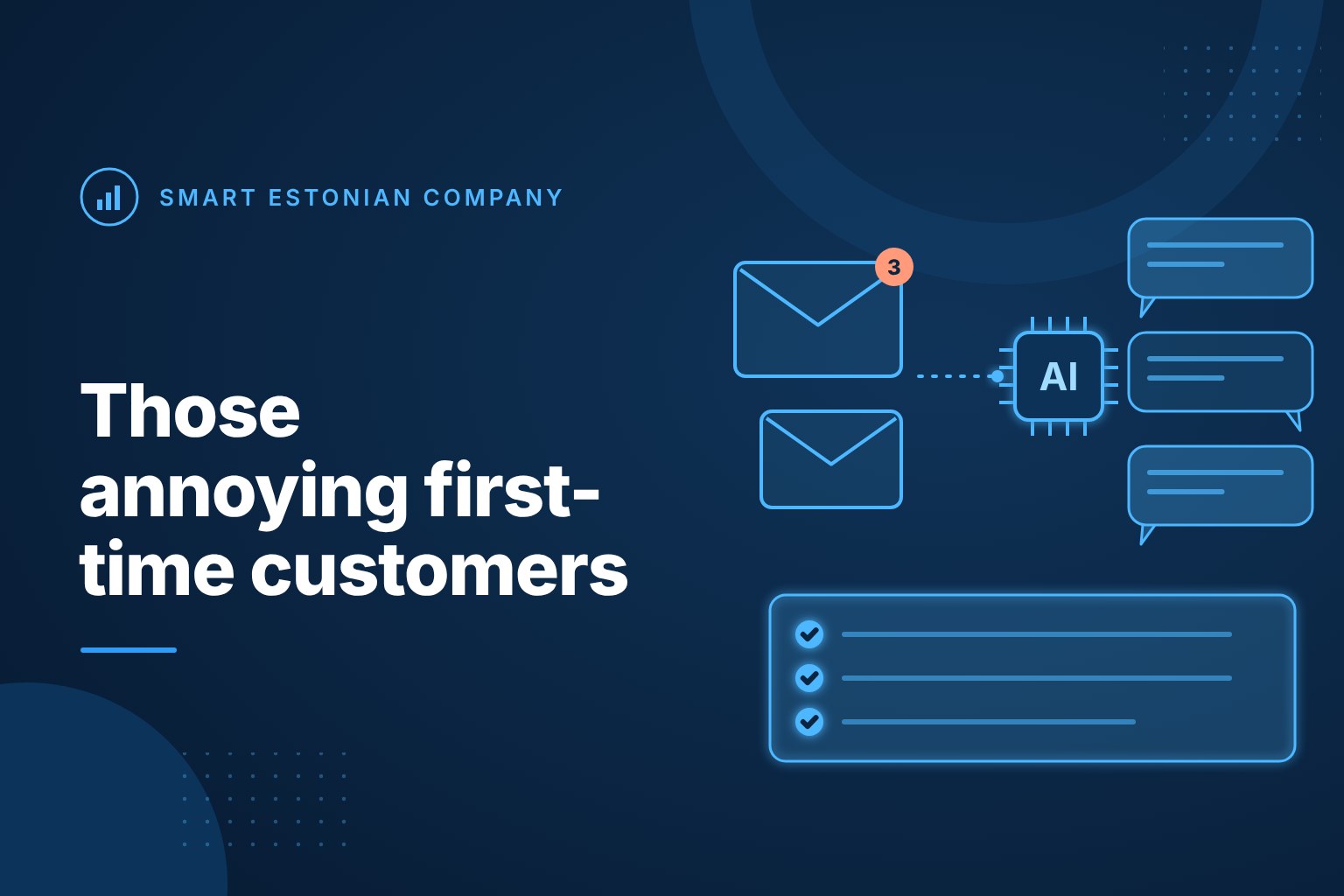
As a solution, I recommended an AI-based email assistant that reads the customer’s emails, detects new orders and drafts a reply with clarifying questions. The AI assistant asks the customer to choose, for example, a colour or size from a list of options, and finds out all the missing information needed to fulfil the order.
The most important step is to teach the assistant, once, all the criteria that used to be known only to the manager. From then on, the AI assistant asks these questions itself.
The manager no longer has to handle every email personally. The assistant sends the customer clarifying questions and collects the answers, and the manager reviews the result and confirms the order. The AI assistant also stands in for the manager when she is on holiday, busy or simply doesn’t want to deal with emails herself.
For the customer, too, ordering becomes faster and more convenient. Which of us would enjoy bouncing 5 emails back and forth with additional questions? The AI assistant can also suggest suitable additional products/parameters, so in most cases the customer only has to review and confirm.
Sound familiar?
Small orders and new customers often seem like an annoying problem, and in some cases companies even consider no longer serving them. But AI and modern digital solutions have created everything needed to automate exactly these kinds of processes and make them self-service. Both service providers and their customers benefit from this.
Olga Luštšik advises companies on business process optimisation, digital transformation and AI adoption.
Digiwise helps companies find the processes where digitalisation and AI deliver measurable results. If you want to know where your company has similar opportunities, start with a Digitalisation Roadmap.
Topics: sales orders, AI agents, automation
This article is part of the series “Smart Estonian Company”: practical stories from Estonian companies on their way to digitalisation.
← Previous: We now have an AI colleague. Her name is Annika.
Next: Does an AI agent need a personal identification code? →